Blog

In recent years, nanofiber technology has revolutionized the cosmetic industry by providing new approaches for skin regeneration, active ingredient delivery, and anti-aging treatments. Through electrospinning, researchers can fabricate ultra-fine polymer fibers with diameters ranging from tens to hundreds of nanometers. These nanofibers exhibit an exceptional surface-area-to-volume ratio, porosity, and biocompatibility, enabling superior absorption and controlled release of cosmetic actives.

SHARE

Nanofibers in Cosmetics — The Science Behind Next-Generation Beauty Solutions

In recent years, nanofiber technology has revolutionized the cosmetic industry by providing new approaches for skin regeneration, active ingredient delivery, and anti-aging treatments. Through electrospinning, researchers can fabricate ultra-fine polymer fibers with diameters ranging from tens to hundreds of nanometers. These nanofibers exhibit an exceptional surface-area-to-volume ratio, porosity, and biocompatibility, enabling superior absorption and controlled release of cosmetic actives.

Applications of Nanofibers in Cosmetics

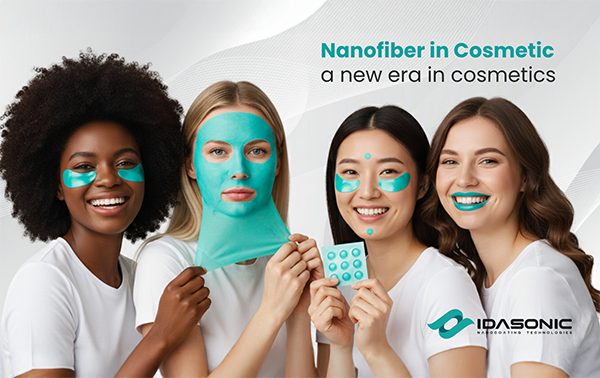
  • Transdermal Delivery Systems: Electrospun nanofibers can encapsulate vitamins, peptides, and antioxidants, enhancing skin penetration efficiency and ensuring targeted delivery.

  • Facial Masks and Patches: Nanofiber sheets loaded with hyaluronic acid, collagen, or ceramides provide instant hydration and long-term rejuvenation effects.

  • Wound Healing and Barrier Repair: Nanofiber matrices mimic the extracellular matrix (ECM), supporting tissue regeneration and recovery in dermo-cosmetic formulations.

  • UV and Pollution Protection: Hybrid nanofibers containing zinc oxide (ZnO), TiO₂, or plant-based antioxidants act as sustainable shields against environmental stressors.

Advantages and Innovation Potential

The integration of nanofiber technology in cosmetics offers several benefits:

  • High active loading efficiency and stability of sensitive ingredients.

  • Customized release kinetics, ranging from rapid hydration to prolonged delivery.

  • Minimal use of preservatives and solvents, supporting clean beauty standards.

  • Eco-friendly production using biodegradable polymers such as PVA, PLA, and HA.

As the demand for sustainable and science-based skincare grows, nanofiber cosmetics represent the bridge between cosmetic chemistry and biomedical engineering.

What Do We Offer?

At Idasonic, our NanoWeaver® electrospinning and UltraSprayer® ultrasonic coating systems empower cosmetic innovators to design advanced nanofiber-based products. From research-scale prototypes to industrial manufacturing, our technologies ensure:

  • Precision-controlled fiber diameter and structure,

  • Consistent active ingredient loading,

  • Seamless integration with spray-coating for hybrid formulations.

With Idasonic, researchers and manufacturers can accelerate cosmetic R&D, shorten product development cycles, and deliver truly next-generation skincare solutions.

✨ Step into the future of cosmetic: [email protected]

CONTACT US

LAST EVENTS & NEWS

What is nanocoating? How does nanocoating work? What materials can be nanocoated? What is ultrasonic spray coating? What is the difference between electrospinning and nanocoating? Why is plasma treatment used before coating?

FOLLOW US

SIGN UP

For company news, product updates and releases, subscribe to our newsletter.

© 2016 IDASONIC: Ultrasonic Spray Coating & Electrospinning Systems

Privacy Policy – Terms and Conditions – Cookie Declaration